A Yamaha jet ski is one of the most popular choices on the water, and for good reason. Yamaha is known for reliable engines, smooth handling and models that suit everyone from first-time riders to racers. Officially, Yamaha calls its personal watercraft WaveRunners, because “Jet Ski” is a Kawasaki trademark. But most riders still search for Yamaha jet skis, so that is what we call them here.
In this guide, we break down the full Yamaha range, explain the engines and features, and share proven tips for choosing the right Yamaha PWC for the way you ride.
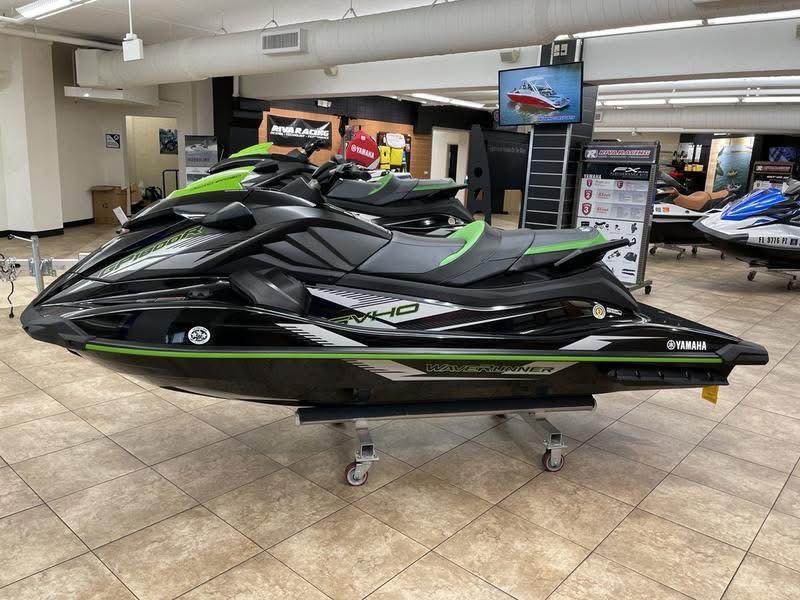
Why choose a Yamaha jet ski?
Yamaha has built personal watercraft for decades, and its reputation rests on a few key strengths.
- Reliable engines: Yamaha marine engines are known for durability and long service life.
- Smooth, stable hulls: many models are praised for handling chop with confidence.
- Wide range: there is a Yamaha jet ski for almost every budget and riding style.
- Strong resale value: well-kept Yamaha jet skis tend to hold their value.
- Easy-to-use controls: features like RiDE make docking and slow-speed riding simple.
The Yamaha jet ski range explained
Yamaha groups its WaveRunners into families. Each family targets a different type of rider. Here is how they compare.
| Family | Type | Best for |
|---|---|---|
| EX | Recreation | Beginners, budget buyers, fun solo rides |
| JetBlaster | Recreation / freestyle | Playful tricks and nimble handling |
| VX | Rec-lite / touring | Families, cruising and towing |
| FX | Premium touring | Long rides, comfort and rough water |
| GP | Performance | Speed, sharp handling and racing |
| SuperJet | Stand-up | Skilled riders and freestyle |
Yamaha EX: the affordable entry point
The EX series is Yamaha’s entry-level recreation range. These skis are light, playful and easy to tow. They use Yamaha’s compact TR-1 three-cylinder engine, which is known for good fuel economy. The EX, EX Sport and EX Deluxe add more features as you move up the range.
Yamaha JetBlaster: built for fun
The JetBlaster is a recreation ski tuned for playful riding. It has a shorter, more agile feel, making it great for spins and tricks in calm water.
Yamaha VX: the all-rounder
The VX family is one of Yamaha’s best sellers. It offers more room and stability than the EX, with comfortable seating for up to three riders. VX models come with the TR-1 engine or, on some versions, Yamaha’s larger 1.8-liter engine. They are a great choice for families and towing.
Yamaha FX: premium comfort
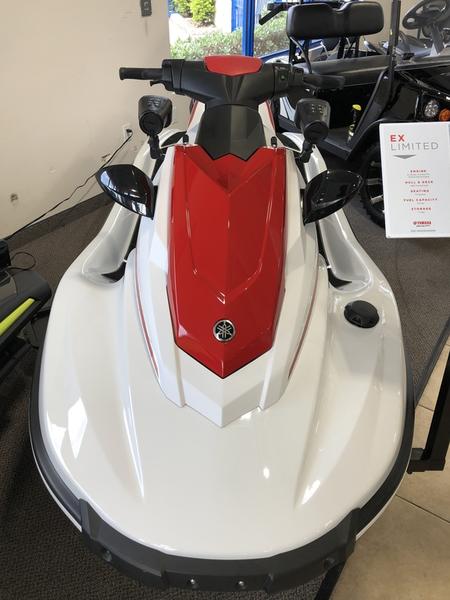
The FX family sits at the top of Yamaha’s touring range. These skis have larger hulls, plush seats, lots of storage and premium features. FX models use the 1.8-liter High Output (HO) engine or the supercharged SVHO engine for serious power.
Yamaha GP: pure performance
The GP series is all about speed and handling. With a race-inspired hull and powerful engines, including the supercharged SVHO, the GP is built for riders who want to go fast and corner hard.
Yamaha SuperJet: the stand-up legend
The SuperJet is Yamaha’s stand-up jet ski. It demands skill and balance, rewarding riders with an athletic, hands-on ride. It is a favorite with freestyle riders.
Yamaha engines: TR-1, HO and SVHO
Engine choice has a big effect on how a Yamaha jet ski feels. Here is a simple overview.
| Engine | Type | Character |
|---|---|---|
| TR-1 | 1.0-liter, three-cylinder | Light, efficient and lively |
| HO (High Output) | 1.8-liter, four-cylinder | Strong, smooth power for touring |
| SVHO | Supercharged 1.8-liter | Maximum acceleration and top speed |
For most riders, the TR-1 or HO engine is more than enough. The SVHO is for experienced riders who want the most power Yamaha offers. You can compare the latest specs on the official Yamaha WaveRunners website.
Yamaha jet ski features to know
RiDE: brake and reverse
RiDE is Yamaha’s intuitive control system. Squeeze the right throttle to go forward and the left lever to slow down or reverse. It makes docking, loading onto a trailer and slow-speed riding far easier.
Drive control and cruise assist
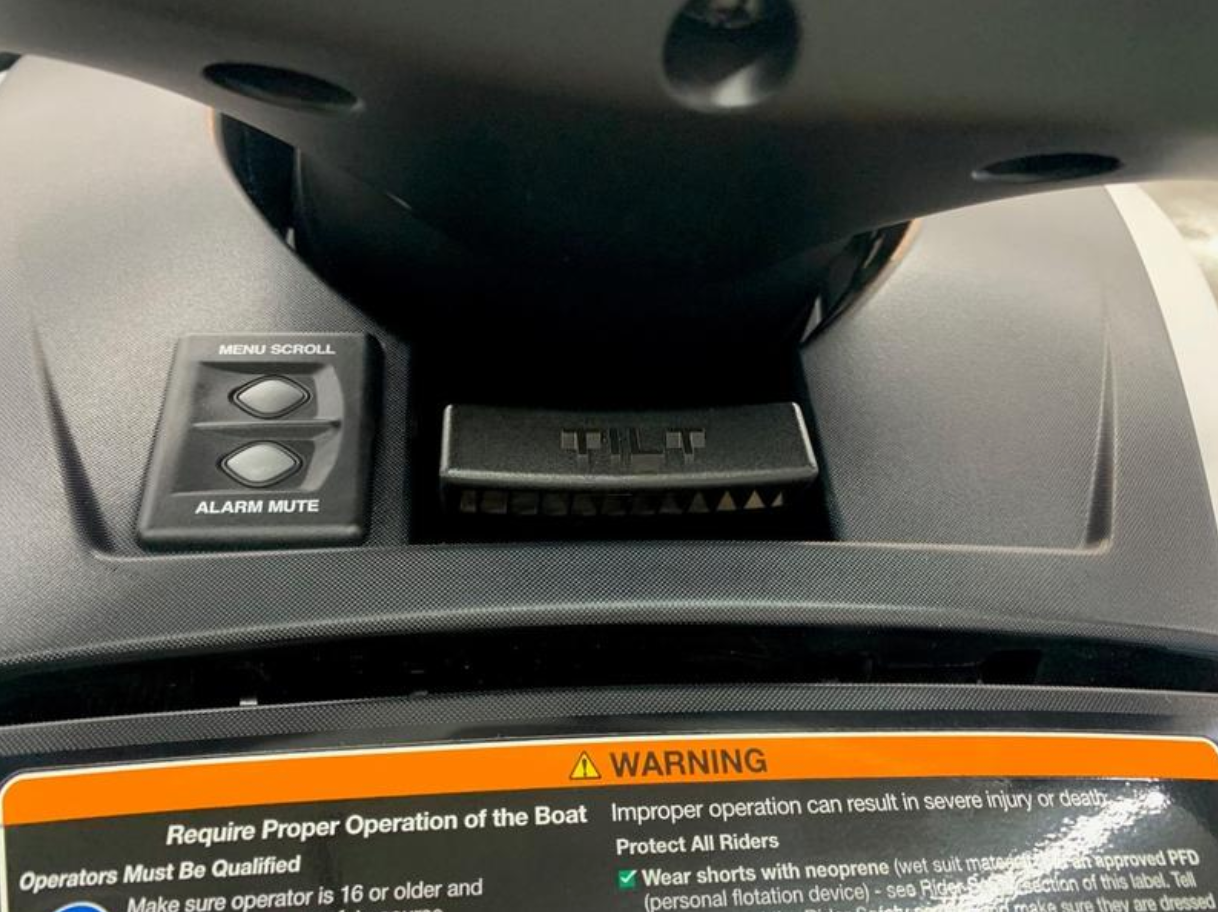
Many models offer modes that limit speed for new riders, cruise assist for long rides and a no-wake mode for harbors and marinas.
Connext touchscreen
Higher-end FX and some VX models feature a touchscreen display that shows speed, fuel, trip data and settings, along with security features on certain models.
Audio and storage
Some Yamaha jet skis come with built-in audio systems. Touring models also offer large front storage, glove boxes and dry storage under the seat.
How to choose the right Yamaha jet ski
With so many models, the choice can feel overwhelming. Answer these questions and the right family usually becomes clear.
How many people will ride?
If you ride alone or with one other person, an EX or JetBlaster may be all you need. If you regularly carry two passengers or tow a tube, step up to a VX or FX, which offer more room, stability and power.
Where will you ride?
On small lakes and calm water, a lighter ski is fun and easy to handle. On open water with wind and chop, such as San Francisco Bay, a larger hull from the VX or FX family will feel smoother and more stable.
What is your budget?
Set a total budget that includes the ski, a trailer, registration, insurance and gear. The EX range offers the lowest entry price. VX models sit in the middle, while FX and GP models cost the most, especially with the SVHO engine.
How experienced are you?
New riders should start with a ski that is forgiving and easy to control. Experienced riders may want the extra performance of an HO or SVHO engine. Remember that more power also means higher fuel use and running costs.
New vs. used Yamaha jet skis
Buying new gives you the latest features, a full warranty and peace of mind. Buying used can save a lot of money, especially on models that are only a few years old.
If you buy used, ask for service records, check the hours and inspect the hull and pump. Yamaha engines are durable, but they still need regular oil changes, flushing after salt water rides and proper winter storage. Browse our pre-owned jet skis for used options.
Yamaha jet ski maintenance tips
- Flush the cooling system with fresh water after every ride in salt water.
- Rinse the hull, engine bay and trailer to remove salt.
- Change the oil and filter at the intervals in your owner’s manual.
- Check the impeller and intake grate for damage or debris.
- Keep the battery charged, especially during long breaks.
- Store the ski covered and dry, and winterize it if you will not ride for months.
A well-maintained Yamaha PWC is reliable for many seasons. Keeping receipts also helps when you sell or trade in your ski later.
Yamaha vs. Sea-Doo vs. Kawasaki
All three brands make excellent skis, and the best choice depends on your priorities.
| Brand | Known for | Popular models |
|---|---|---|
| Yamaha | Reliable engines, smooth handling, strong resale | EX, VX, FX, GP |
| Sea-Doo | Innovation, lightweight hulls, wide range | Spark, GTI, GTX, RXP-X |
| Kawasaki | Big power, stand-up heritage | STX, Ultra, SX-R |
Many riders try all three before deciding. Compare Sea-Doo jet skis and Kawasaki jet skis alongside Yamaha models to see which feels right.
Accessories for your Yamaha jet ski
- A trailer sized for your model.
- A fitted cover to protect the seat and deck from sun and dust.
- U.S. Coast Guard-approved life jackets for every rider.
- Dock lines, fenders and an anchor or sand spike.
- A tow rope and tube for watersports.
- Other PWC accessories such as dry bags and phone mounts.
Riding a Yamaha jet ski in California
To operate a PWC in California, you must be at least 16 and generally need a California Boater Card. Your ski must be registered with the California DMV and display its registration number and sticker. Every rider must wear a U.S. Coast Guard-approved life jacket, and the operator must attach the safety lanyard.
Before heading out on San Francisco Bay, check the marine forecast and tide times. The Bay can be windy and choppy in the afternoon, so plan rides for calmer mornings when you can.
Best Yamaha jet ski for different riders
Here is how we would match Yamaha models to common types of riders. Use it as a starting point, then test ride if you can.
Best for beginners: Yamaha EX
The EX is light, affordable and easy to ride. It is forgiving for new riders, simple to tow and cheap to run. If you mostly ride calm water and want a fun, low-cost ski, the EX is hard to beat.
Best for families: Yamaha VX
The VX has room for three, good stability and plenty of storage. It handles towing well and is comfortable for long days. For many families, it is the sweet spot between price and features.
Best for long-distance touring: Yamaha FX Cruiser
The FX Cruiser models add a plush, cruiser-style seat and a long list of comfort features. With the HO or SVHO engine, they are built for long rides on open water.
Best for speed: Yamaha GP SVHO
If speed and cornering are your priority, the GP with the supercharged SVHO engine is the performance choice. It rewards experienced riders with fast acceleration and sharp handling.
Best for skill and tricks: Yamaha SuperJet
The stand-up SuperJet is a completely different experience. It takes practice, but it offers an athletic, freestyle ride that many riders love.
Running costs of a Yamaha jet ski
Owning a Yamaha jet ski involves more than the purchase price. Plan for these ongoing costs each year.
| Cost | What to expect |
|---|---|
| Fuel | Depends on engine size and how hard you ride |
| Servicing | Oil changes and checks at set hour intervals |
| Insurance | Varies by model, value and your history |
| Registration | California DMV registration and renewal |
| Storage | Free at home, or a fee for a storage yard |
| Launch fees | Many ramps and marinas charge per launch |
Smaller engines like the TR-1 are generally cheaper to run than the 1.8-liter HO and SVHO engines. If you plan to ride often, fuel economy can make a real difference over a season.
Yamaha jet ski safety essentials
Safety comes first on any personal watercraft. Before each ride, check the fuel, battery and steering. Make sure the safety lanyard is attached and that every rider wears a properly fitted life jacket.
- Ride at a safe speed and keep a lookout behind you before turning.
- Stay well away from swimmers, divers, paddlers and moored boats.
- Respect no-wake zones near docks, marinas and beaches.
- Never ride after dark; PWCs are not allowed to operate at night.
- Avoid alcohol and drugs before and during your ride.
- Learn the navigation rules through an approved course.
You can find free safety resources from the U.S. Coast Guard Boating Safety program, which covers everything from life jackets to navigation rules.
Common Yamaha jet ski questions from new owners
How long does a Yamaha jet ski engine last?
With regular servicing, Yamaha four-stroke engines can last for many hundreds of hours. Flushing after salt water rides and proper winter storage help a lot.
Is a Yamaha jet ski good in salt water?
Yes. Yamaha jet skis are designed for both fresh and salt water. Just flush the engine and rinse the ski after every salt water ride to prevent corrosion.
Can a Yamaha jet ski tow a tube or skier?
Most three-seat models, such as the VX and FX, are great for towing. Check your local rules, as you will need an observer on board or a mirror, depending on the regulations.
Test riding before you buy
If you can, ride a few different models before you decide. Pay attention to how the seat feels, how far you reach for the handlebars and how the ski handles chop. A model that looks perfect on paper may feel too big, too small or too lively once you are on the water.
Bring the people who will ride with you most often. A ski that feels roomy for one person can feel tight with two adults and a child. Try boarding from deep water, too, because some skis are easier to climb back onto than others.
Towing and storing your ski
Most owners tow their ski on a single trailer behind a car, SUV or truck. Check your vehicle’s towing capacity in the owner’s manual, and make sure the trailer’s lights and brakes, if fitted, work properly. Galvanized or aluminum trailers resist corrosion better in salt water.
At home, store the ski on its trailer under a breathable cover, ideally in a garage or carport. If you store it outside, keep it covered and check it every few weeks for water, pests and battery charge.
Preparing for winter
Even in California, many riders take a break in the coldest months. Before storing the ski for a long period, add fuel stabilizer and run the engine, flush the cooling system, fog the engine if your manual recommends it and connect the battery to a maintainer. A professional winterization service is a good idea if you are unsure.
Understanding hull materials
Yamaha builds its hulls from different materials depending on the model. Some recreation skis use lighter materials to keep weight and price down, while touring and performance models use stiffer, more advanced materials for strength and a smoother ride. A lighter hull feels playful and is easier to tow. A heavier, stiffer hull cuts through chop and feels more planted at speed.
When you compare models, look at the dry weight, length and beam (width). A longer, wider ski is usually more stable, which matters if you carry passengers or ride on open water. A shorter, narrower ski turns more quickly and feels sportier.
Warranty and protection plans
New skis come with a manufacturer’s warranty, and extended protection plans are often available. Read the terms carefully so you know what is covered and how long it lasts. Keeping up with scheduled servicing is usually a condition of the warranty, so save every receipt. The FTC offers a useful overview of how product warranties work if you want to understand your rights.
If you buy used, ask whether any factory warranty remains and whether it can transfer to you. Some warranties move with the ski, which can add real value to a used purchase.
Getting the most from your first season
Your first season with a new ski is about building confidence. Start in calm, quiet water and practice slow-speed turns, docking and reboarding. Get to know the controls, including the brake and reverse, before you ride in busy areas. Join a local riding group or club if you can; experienced riders are a great source of advice on routes, launch spots and maintenance.
Keep a simple checklist in your car or on your phone so you never forget the essentials: life jackets, lanyard, registration, phone pouch, water and sunscreen. A few minutes of preparation means more time on the water and fewer surprises.
Final thoughts: is a Yamaha jet ski right for you?
If you want a reliable, well-built ski with a model for every budget, a Yamaha jet ski is an excellent choice. Beginners love the EX for its low price and easy handling. Families gravitate to the VX. Riders who want comfort and power pick the FX, and speed fans head straight for the GP.
At Hayling Jetsport in San Francisco, you can browse Yamaha WaveRunners for sale, compare prices and stock, and add a trailer and accessories to the same order. Have a question about a model? Email sale@haylingjetsport.org and we will help you find the right Yamaha PWC for your riding.
Leave a Reply