The Yamaha WaveRunner name has been part of personal watercraft history for decades. Today the range covers everything from affordable fun machines to supercharged luxury tourers. For most buyers, though, the choice comes down to three families: the VX, the FX and the GP. Each one feels very different on the water.
This guide compares those three Yamaha WaveRunners side by side. We look at who each model is for, how they ride, what they cost to run and which extras are worth having, so you can pick the best WaveRunner for your style of riding.
A quick history of the Yamaha WaveRunner
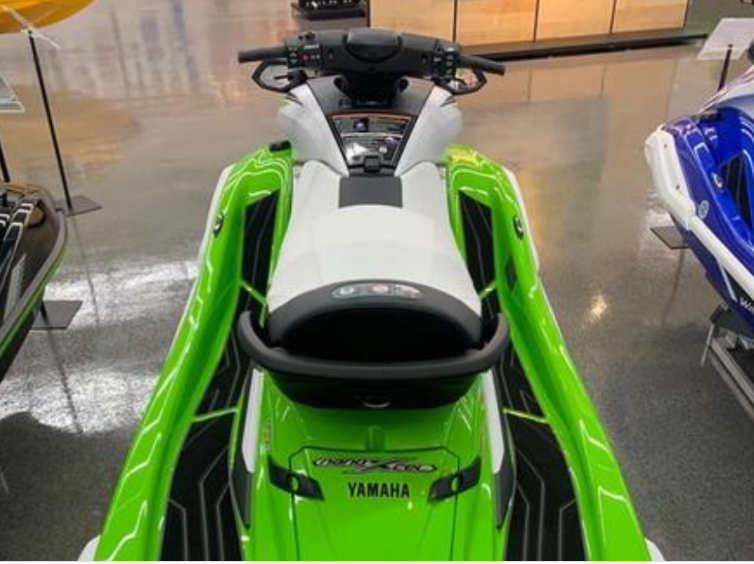
Yamaha introduced its first WaveRunner in the late 1980s, helping to popularize the sit-down personal watercraft. Since then, the brand has refined its hulls, introduced powerful four-stroke engines and added rider aids like the RiDE brake and reverse system. Today Yamaha WaveRunners are known for reliability, smooth handling and strong resale value.
VX vs FX vs GP at a glance
| VX | FX | GP | |
|---|---|---|---|
| Main purpose | All-round fun and family | Premium touring and comfort | Performance and racing |
| Seating | Up to 3 | Up to 3 | Up to 3 |
| Engines | TR-1 or 1.8L HO | 1.8L HO or SVHO | 1.8L HO or SVHO |
| Ride feel | Stable and easy | Plush and planted | Sharp and aggressive |
| Price level | Mid-range | Premium | Premium |
If you are still unsure after reading the table, think about the last time you rode. Did you want to explore and relax, or did you want to go as fast as possible? That answer usually points you to the right WaveRunner.
Yamaha WaveRunner VX: the family favorite
The VX family is one of the best-selling ranges in Yamaha’s lineup. It offers a balanced mix of comfort, stability and value. Standard VX models use the efficient TR-1 three-cylinder engine, while VX Cruiser HO versions step up to the 1.8-liter HO engine for more power.
Who should buy a VX?
- Families who want room for three and good stability.
- Riders who tow tubes or wakeboards occasionally.
- Buyers who want strong features without the top-tier price.
- Anyone who values fuel economy and easy handling.
VX strengths and trade-offs
The VX is easy to ride, comfortable and affordable to run. The trade-off is that it does not have the plush feel or rough-water confidence of the larger FX, nor the speed of the GP. For many owners, that does not matter at all.
Yamaha WaveRunner FX: premium touring
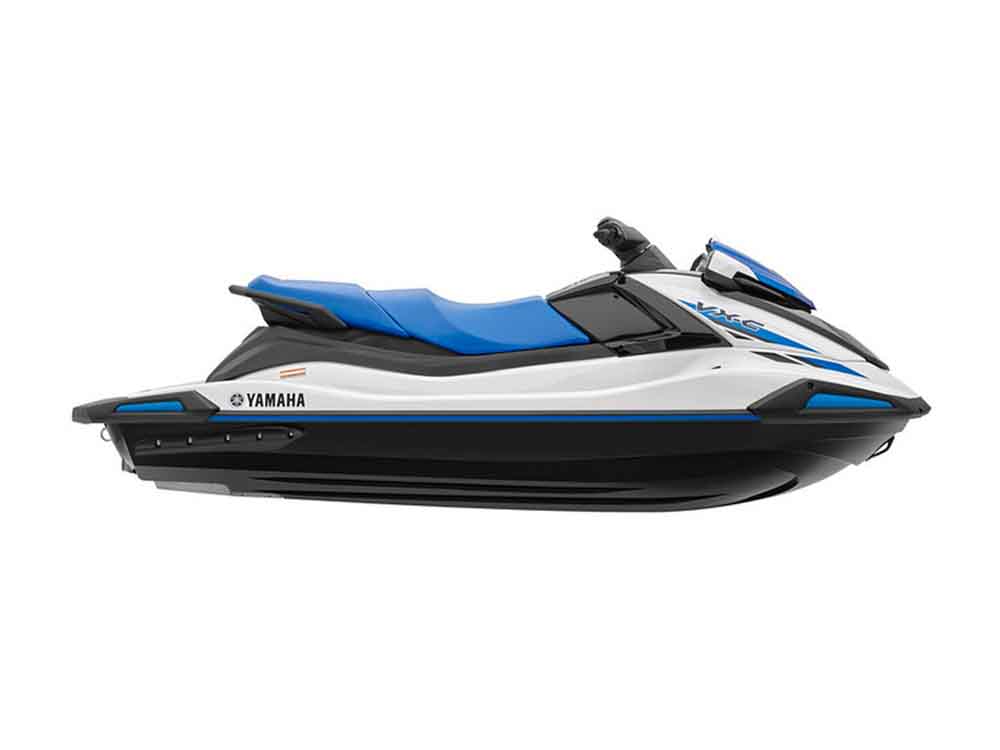
The FX sits at the top of Yamaha’s touring range. It has a larger hull, deeper storage and a long list of premium features. FX Cruiser versions add a cruiser-style seat that many riders find more comfortable for long days.
Who should buy an FX?
- Riders who cover long distances or explore open water.
- Owners who often ride in chop, such as on San Francisco Bay.
- Buyers who want a high-end display, audio and comfort features.
- Families who want the most comfortable WaveRunner for passengers.
FX strengths and trade-offs
The FX rides beautifully in rough water and feels planted at speed. With the supercharged SVHO engine, it is also very fast. The trade-offs are a higher price, more weight to tow and higher running costs than the VX.
Yamaha WaveRunner GP: built for speed
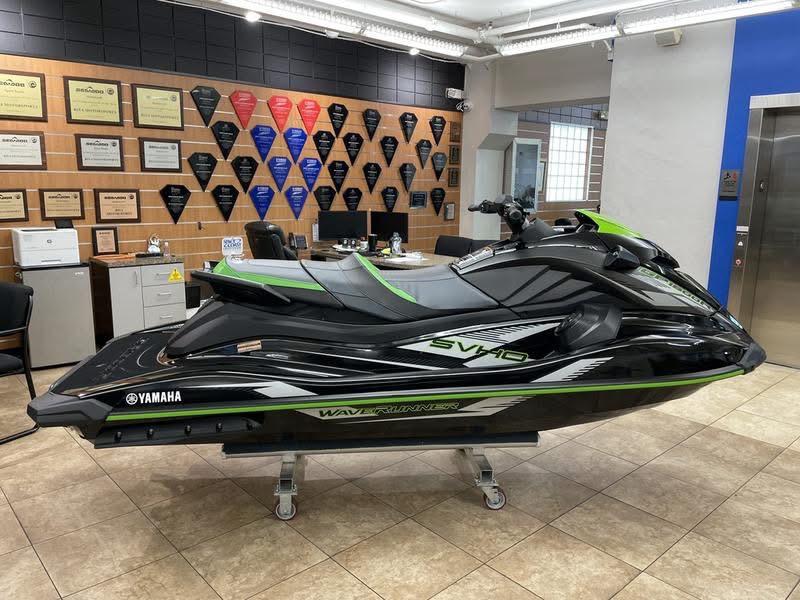
The GP is Yamaha’s performance WaveRunner. It has a race-inspired hull designed for quick turns and high-speed stability. With the SVHO engine, it delivers strong acceleration and a thrilling top speed.
Who should buy a GP?
- Experienced riders who want maximum performance.
- Riders who enjoy sharp, aggressive handling.
- Anyone interested in racing or performance riding.
GP strengths and trade-offs
The GP is exciting and responsive, but it is not the most comfortable choice for passengers on long rides. It also uses more fuel when ridden hard. For pure fun and speed, though, it is hard to match.
Engines compared: TR-1, HO and SVHO
The engine is the biggest single factor in how a WaveRunner feels. Yamaha offers three main options across the VX, FX and GP families.
TR-1: light and efficient
The TR-1 is a compact three-cylinder engine found in recreation and many VX models. It is light, which helps the ski feel nimble, and it is known for good fuel economy. For relaxed cruising and family fun, it has plenty of power.
1.8-liter HO: strong and smooth
The High Output engine is a 1.8-liter four-cylinder. It delivers smooth, strong acceleration and is ideal for towing, carrying three adults and riding in rougher water. It is a popular choice in the VX Cruiser HO, FX and GP.
SVHO: supercharged power
The SVHO adds a supercharger to the 1.8-liter engine for maximum acceleration and top speed. It is found in the top FX and GP models. It is thrilling to ride, but it costs more to buy and run, and it is best suited to experienced riders.
Features that set Yamaha WaveRunners apart
RiDE dual-throttle control
RiDE puts a forward throttle on the right handlebar and a reverse and braking throttle on the left. It is simple to learn and makes docking and trailer loading far less stressful. For many new owners, it is one of the most useful features on any Yamaha WaveRunner.
Drive control and speed limiting
Higher-end models let you choose ride modes and set speed limits. A learning mode is useful for new riders or younger passengers, while cruise assist helps reduce fatigue on long rides.
Displays and connectivity
Premium models feature color touchscreen displays that show speed, fuel, trip data and settings. Some also offer audio systems and security features. Entry-level models use simpler displays to keep costs down.
Storage and comfort
Touring models offer large front storage, glove boxes and under-seat storage. The FX Cruiser seat is a highlight for comfort. The VX offers a good balance of storage and size, while the GP keeps things lighter for performance.
Which Yamaha WaveRunner is best for San Francisco Bay?
San Francisco Bay can be beautiful in the morning and rough by mid-afternoon. Strong currents, wind chop and cold water all affect your choice of ski.
- For mostly calm mornings and family rides: a VX is comfortable, stable and economical.
- For frequent open-water rides and chop: an FX feels smoother and more planted.
- For experienced riders chasing speed: a GP is thrilling, but plan rides for calmer conditions.
Whatever you choose, check the Bay Area marine forecast and tide predictions before every ride, and avoid the strongest ebb tides near the Golden Gate.
Running costs: VX vs FX vs GP
| Cost area | VX | FX | GP |
|---|---|---|---|
| Purchase price | Lower | Higher | Higher |
| Fuel use | Lowest, especially with TR-1 | Moderate to high | Moderate to high |
| Insurance | Lower | Higher | Higher |
| Towing | Easiest | Heavier | Moderate |
| Resale value | Strong | Strong | Strong |
If you ride often, fuel economy matters. A VX with the TR-1 engine is usually the most economical Yamaha WaveRunner to run. FX and GP models with the HO or SVHO engines cost more to fuel, especially when ridden hard.
The wider WaveRunner lineup: EX, JetBlaster and SuperJet
The VX, FX and GP get most of the attention, but the full WaveRunner lineup also includes three other families worth knowing about.
- EX: Yamaha’s entry-level recreation range. Light, affordable and fun, with the efficient TR-1 engine.
- JetBlaster: a playful recreation ski tuned for spins, slides and tricks.
- SuperJet: Yamaha’s stand-up ski, built for skilled riders and freestyle.
If your budget is tight or you mostly ride solo in calm water, an EX may be all you need. If you want a sit-down ski with real comfort and stability, the VX is the natural step up. You can explore the full WaveRunner lineup on the official Yamaha WaveRunners website.
New or pre-owned Yamaha WaveRunner?
A new WaveRunner gives you the latest technology, a full warranty and the choice of colors and options. A pre-owned model can save thousands, and Yamaha’s strong reliability makes used skis an appealing choice.
What to check on a used WaveRunner
- Engine hours and a full service history.
- Signs of overheating, corrosion or water in the oil.
- Hull condition, especially around the intake and ride plate.
- Impeller and wear ring condition.
- Whether the RiDE system and electronics work properly.
- Registration and HIN that match the paperwork.
If you are not confident inspecting a ski yourself, pay a marine mechanic for a pre-purchase inspection. It is a small cost compared with the price of a major repair. Browse our pre-owned jet skis for used options.
Must-have accessories for your Yamaha WaveRunner
- A PWC trailer that fits your model’s length and weight.
- A custom-fit cover to protect against sun, dust and bird droppings.
- U.S. Coast Guard-approved life jackets for every rider.
- A spare safety lanyard kept in a dry place.
- Dock lines, fenders and a sand spike or anchor.
- A tow rope and tube if you plan to tow.
- Dry bags, phone mounts and other accessories.
Yamaha WaveRunner maintenance schedule
Regular care keeps your WaveRunner reliable and protects its resale value. Always follow the exact schedule in your owner’s manual, but most owners follow a routine like this.
| When | What to do |
|---|---|
| After every ride | Flush with fresh water (especially after salt water), rinse the hull and trailer, dry the engine bay |
| Every few rides | Check oil level, inspect the intake and impeller for debris |
| At set hour intervals | Change engine oil and filter, check spark plugs and belts as listed in the manual |
| Every season | Inspect the hull, steering, trailer bearings and lights |
| Before long storage | Stabilize fuel, flush, fog the engine if recommended and maintain the battery |
Many owners book a dealer service before the season starts, so the ski is ready when the weather warms up.
Rules for riding a WaveRunner in California
California requires PWC operators to be at least 16. Most operators also need a California Boater Card. Your WaveRunner must be registered with the California DMV and display its numbers and current sticker.
- Every rider must wear a U.S. Coast Guard-approved life jacket.
- The operator must attach the safety lanyard.
- PWCs cannot be operated at night.
- Follow speed limits, no-wake zones and local rules.
- Keep a safe distance from swimmers, divers and other vessels.
Real-world ownership tips
Plan your launch routine
Launching a WaveRunner is easy once you have a routine. Remove the cover and straps in the parking area, attach a dock line, back down the ramp, start the engine once the ski floats and idle off the trailer. RiDE reverse makes this simple. Practice at a quiet ramp before your first busy weekend.
Look after the impeller
Shallow water, sand and debris can damage the impeller. Avoid riding in very shallow water, and never run the engine while the ski is beached. If you notice a drop in performance or a strange vibration, inspect the intake for debris.
Protect against salt
Salt is the enemy of any marine engine. Flush the cooling system after every salt water ride, rinse the hull, trailer and engine bay, and spray metal parts with a marine corrosion inhibitor. These few minutes after each ride make a huge difference to long-term reliability.
Keep the battery healthy
A weak battery is a common cause of failed starts. Use a battery maintainer during long breaks, check terminals for corrosion and replace the battery when it no longer holds a charge.
How to test ride and compare models
Reading specs only tells you so much. If you can, ride each model you are considering, ideally on the same day and in similar conditions. Note how easy it is to board from the water, how the seat feels after twenty minutes and how confident you feel at speed and in turns.
Bring a passenger for part of the test, since a ski that feels lively with one rider can feel very different with two. Try reverse and slow-speed maneuvering too, because you will use those skills every time you dock or load the trailer.
Budgeting for your first year
A simple budget helps you avoid surprises. Beyond the purchase price, set aside money for registration and taxes, insurance, a trailer if one is not included, life jackets and a cover, fuel for the season, and at least one professional service. Many owners also budget for a few extras, such as a tube or a better seat cover, once they know how they like to ride.
Planning these costs up front means you can enjoy your first season without worrying about the next bill. It also helps you decide whether the extra cost of an HO or SVHO engine fits comfortably within your budget.
Selling or trading in later
Yamaha skis tend to hold their value well, especially when they come with service records, a clean hull and a matching trailer. Keep your manuals, receipts and spare keys together, and take good photos when you are ready to sell. A well-cared-for ski will always attract more interest and a better price.
Riding with passengers and towing
Three-seat models are ideal for riding with friends and family, but extra weight changes how the ski behaves. It takes longer to get up on plane, stops more slowly and leans differently in turns. Brief your passengers before you set off: hold on firmly, lean with the rider, and tap the rider’s shoulder if they want to slow down or stop.
If you plan to tow a tube, wakeboard or skier, check local rules first. In many places you need an observer on board or an approved mirror, and you must keep a safe distance from shorelines, docks and other boats. Choose a model with enough power and a tow hook, and start slowly so the person you are towing can settle in.
Finally, take a few minutes to adjust the seating position, handlebar reach and mirrors before each ride. A comfortable rider is a safer rider, especially on longer trips across open water.
One more tip: keep a small kit on board with a spare lanyard, a whistle, a basic first aid kit and a towel in a dry bag. It weighs almost nothing and means you are ready for minor problems far from the launch ramp.
Yamaha WaveRunner FAQs
Which Yamaha WaveRunner is the most fuel efficient?
Models with the TR-1 engine, such as the EX and many VX versions, are generally the most fuel efficient in the range.
Is the FX worth the extra cost over the VX?
If you ride long distances, carry passengers often or ride in choppy water, the FX’s comfort and stability are worth it. For calmer water and shorter rides, the VX offers excellent value.
Can beginners ride a GP?
They can, especially with speed-limiting modes, but most beginners will be more comfortable on a VX or EX. The GP is best enjoyed once you have some experience.
How many people can a Yamaha WaveRunner carry?
Most VX, FX and GP models seat up to three people. Always check the weight capacity on the ski and never exceed it.
Are Yamaha WaveRunners reliable?
Yes. Yamaha has a strong reputation for reliability, as long as owners follow the service schedule and care for the ski after salt water rides.
Find your Yamaha WaveRunner at Hayling Jetsport
Whether you choose a family-friendly VX, a luxurious FX or a thrilling GP, the right Yamaha WaveRunner will give you years of fun on the water. At Hayling Jetsport in San Francisco, you can browse Yamaha WaveRunners for sale, compare prices and stock and add a trailer and accessories to the same order. Questions about the WaveRunner lineup? Email sale@haylingjetsport.org and we will help you choose.
Leave a Reply