A fishing jet ski is one of the fastest-growing ways to fish. It gives you the speed to reach distant spots, the agility to work tight structure and the freedom to launch from small ramps and beaches. Compared with a boat, it is cheaper to buy, cheaper to run and easier to store. And when the fishing is done, you still have a ski to ride.
In this guide, we cover the best fishing jet skis, how to rig a regular ski for fishing, the gear you need, how to stay safe offshore and ten proven tips to make jet ski fishing more productive.
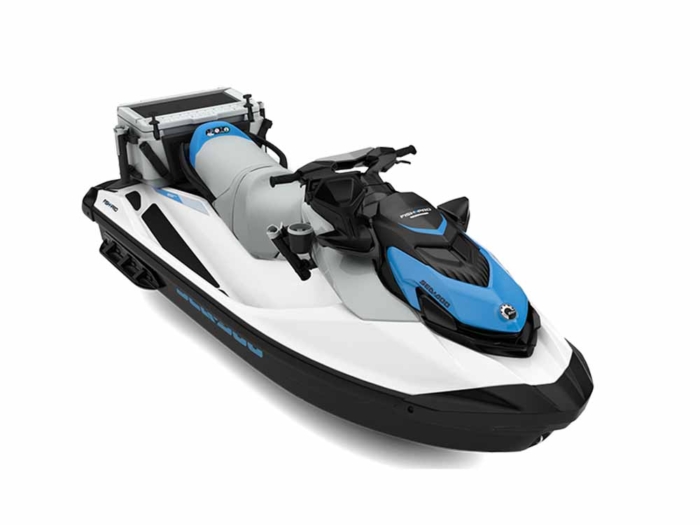
What makes a good fishing jet ski?
Not every ski is a good fishing platform. The best fishing jet skis share a few key qualities.
- Stability at rest: a wide, heavy hull stays steady while you cast, reel and land fish.
- Range: a large fuel tank lets you reach distant spots and return safely.
- Storage: space for tackle, food, safety gear and your catch.
- Rear platform space: room for a cooler, rod holders and moving around.
- Low-speed control: brake, reverse and trolling or slow-speed modes help you position the ski.
- Reliable electronics: a fish finder and GPS make finding fish and navigating easier.
Best fishing jet skis
Sea-Doo Fish Pro
The Sea-Doo Fish Pro is the best-known purpose-built fishing jet ski. It comes with a wide, stable hull, an extended rear platform, a fishing cooler with rod holders, a large fuel tank, a fish finder and a trolling mode. It is available in several versions. Read our Sea Doo Fish Pro guide for a full comparison.
Touring skis with fishing accessories
Many anglers rig large touring skis, such as the Yamaha FX, Sea-Doo GTX or Kawasaki Ultra, with coolers, rod holders and portable fish finders. These skis offer stable hulls, good range and comfort, and they double as excellent family skis.
Adventure and explorer skis
Some touring skis are designed for long-range adventure, with extra storage, larger fuel capacity and rugged features. They can make good fishing platforms for anglers who also want to explore.
How to rig a jet ski for fishing
If you already own a touring ski, you can turn it into a capable fishing jet ski with a few upgrades.
- Add a rear cooler or fish box: it holds your catch, bait and drinks, and many include rod holders.
- Fit rod holders: mount them to the cooler or rear rails so rods are secure while you ride.
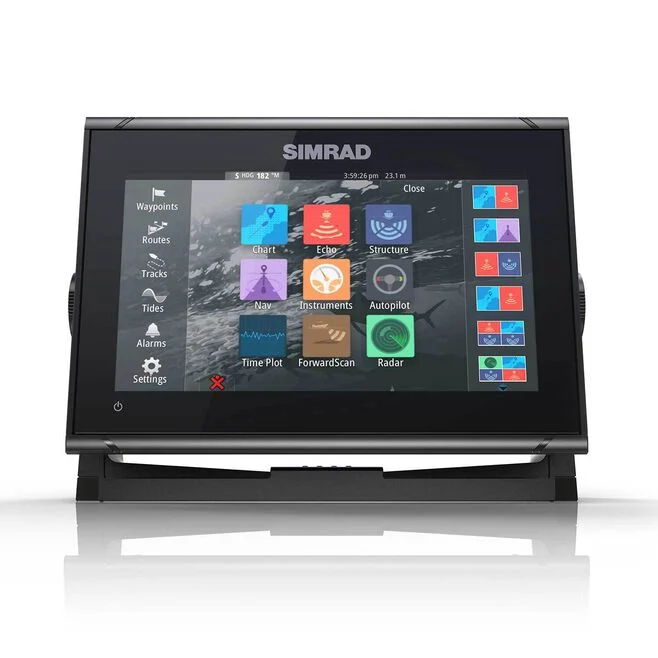
- Install a fish finder: choose a compact unit with GPS and a transducer suited to PWC mounting.
- Add a small anchor or drift sock: it helps you hold position or slow your drift.
- Carry dry storage: use dry bags or a sealed box for tackle and electronics.
- Add a boarding ladder: it makes reboarding easier when you are carrying gear.
Make sure every addition is securely mounted and does not block the seat, controls or reboarding step. Check the ski’s weight capacity and stay within it.
Essential gear for jet ski fishing
- A U.S. Coast Guard-approved life jacket with pockets for tools and a radio.
- A VHF radio and a phone in a waterproof case.
- A compact landing net and a lip grip tool.
- Pliers, a knife, line cutters and a small tackle box.
- Short travel rods or rods that fit the holders securely.
- A first aid kit, sunscreen, water and snacks.
- A dry bag with warm layers, especially on cold water.
- Extra jet ski accessories such as storage bags and mounts.
Jet ski fishing vs. kayak and boat fishing
| Fishing jet ski | Kayak | Boat | |
|---|---|---|---|
| Speed | Fast | Slow | Fast |
| Range | Good to excellent | Limited | Excellent |
| Stability | Good on fishing models | Varies | Excellent |
| Launching | Ramps and beaches | Almost anywhere | Ramps only |
| Running costs | Low to moderate | Very low | High |
A fishing jet ski sits between a kayak and a boat. It has the speed and range of a boat, the launch flexibility of a kayak and running costs that are far lower than most boats.
10 proven tips for jet ski fishing
1. Plan around tide and wind
Wind and current shape both comfort and fishing. Check the marine forecast and tide predictions before every trip. Slack tide is often the best time to fish spots that are hard to hold in strong current.
2. Start early
Mornings are often calmer and less crowded, and fish are frequently more active at first light. On San Francisco Bay, afternoon winds can build quickly, so an early start gives you the best conditions.
3. Travel light
Space is limited, so bring only what you need. A small, well-organized tackle box beats a big bag of everything.
4. Secure everything
Waves and spray will test every strap and latch. Use leashes on rods and tools, and keep loose items in sealed storage.
5. Learn your fish finder
Practice reading structure, bait and fish on your screen before you rely on it. Mark productive spots and safe routes home.
6. Approach spots quietly
Slow down well before you reach a spot. Idle in and shut off, or drift in, so you do not spook fish.
7. Use drift and trolling techniques
Drifting across a productive area and trolling along drop-offs both suit a fishing jet ski well. Use trolling or slow-speed modes if your ski has them.
8. Land fish at the rear
Bring fish to the rear platform, keep your weight centered and use a net or lip grip. Leaning far over the side can tip a smaller ski.
9. Keep a fuel reserve
Use the rule of thirds: one third of your fuel to get out, one third to get back and one third in reserve.
10. Rinse everything after salt water
Flush the engine, rinse the hull and deck, and rinse your reels and electronics after every salt water trip. Salt is the biggest enemy of any fishing jet ski.
Safety for anglers on a PWC
Jet ski fishing often takes you further from shore than a normal ride, and you may spend hours on the water. Treat safety as part of your fishing gear.
- Wear your life jacket at all times, not just while riding.
- Attach the safety lanyard whenever the engine is running.
- File a float plan with someone on shore.
- Carry a VHF radio and know how to call for help.
- Watch the weather and come back early if conditions change.
- Dress for the water temperature, not the air temperature.
- Avoid shipping lanes and give large vessels plenty of room.
For more safety guidance, see the U.S. Coast Guard Boating Safety resources. In California, PWC operators must be at least 16 and generally need a California Boater Card.
Licenses and regulations
The same fishing rules apply on a jet ski as on any boat. You need a valid fishing license for the area you fish, and you must follow seasons, size limits and bag limits. Some areas have marine protected zones where fishing is restricted or banned. Check the current rules before every trip, as they can change.
Your ski must also be registered and display its numbers. Check local rules on where PWCs can operate, as some harbors and parks restrict them.
Best fish to target from a jet ski
What you catch depends on where you fish and the season. In and around the San Francisco Bay Area, anglers target species such as striped bass, halibut, and rockfish and lingcod outside the Golden Gate in season. Inland lakes and the Delta offer bass and other freshwater species. Always check the current regulations for each species.
Choosing between a purpose-built and a rigged fishing jet ski
Once you decide to fish from a PWC, the next question is whether to buy a purpose-built fishing jet ski or rig a touring ski yourself. Both approaches work, but they suit different anglers.
| Purpose-built fishing ski | Rigged touring ski | |
|---|---|---|
| Stability | Excellent, designed for fishing | Good, depends on hull |
| Fishing features | Integrated and tested | Added piece by piece |
| Cost | Higher up front | Spread over time |
| Versatility | Great for fishing, good for riding | Great for riding, good for fishing |
| Resale | Strong among anglers | Strong among general buyers |
If fishing is your main reason for buying, a purpose-built model like the Sea-Doo Fish Pro is hard to beat. If you want a family ski that fishes well on weekends, a rigged touring ski can be the perfect compromise.
Storage and organization on a fishing jet ski
Good organization makes a huge difference. Plan where everything lives before your first trip, and keep the same layout every time so you can find things quickly.
- Front storage: safety kit, first aid, spare clothes and food in dry bags.
- Glove box: phone, keys, sunscreen and small tools.
- Rear cooler or fish box: bait, drinks and your catch.
- Rod holders: rods rigged and ready, secured with leashes.
- Life jacket pockets: pliers, line cutters and your VHF radio.
A tidy deck is safer, especially when you are landing a fish or moving around on the rear platform.
Maintaining a fishing jet ski
Fishing trips put extra strain on a ski. You may run for long periods at low speed, carry extra weight and spend more time in salt water. A strict maintenance routine keeps your fishing jet ski reliable.
- Flush the cooling system with fresh water after every salt water trip.
- Rinse the hull, deck, cooler, rod holders and trailer.
- Wipe and dry electronics and check connections for corrosion.
- Check the oil and look for leaks before each trip.
- Inspect the impeller and intake for debris, weed and fishing line.
- Service the ski at the recommended hour intervals.
- Keep the battery charged, especially if you run electronics for hours.
Fishing line wrapped around the impeller shaft is a common problem. Check for it regularly and remove it carefully, as it can damage seals over time.
Planning your first trip
Your first trip should be short, close to shore and in calm conditions. Choose a familiar area, pick a morning with light winds and plan to be back well before the afternoon breeze builds. Tell someone your plan, including where you will launch, where you will fish and when you expect to return.
At the ramp, take your time. Load gear in a fixed order, check that the cooler and rod holders are secure, and confirm your electronics are working before you leave the dock. Once on the water, ride to your first spot at a comfortable speed, then practice slowing, drifting and holding position before you start fishing.
Keep the first outing simple: one or two rods, a small selection of lures and a clear plan. The goal is to learn how the ski behaves with gear on board and how it drifts in the wind and current. Each trip will teach you something new, and your setup will improve with every outing.
Dressing for the water
Dress for the temperature of the water, not the air. Bay Area water stays cold all year, and falling in can quickly become dangerous. A wetsuit or drysuit, layered clothing, gloves and a hat make long sessions far more comfortable. Bring a dry layer in a sealed bag in case you get soaked by spray on the run home.
Sun protection matters too. Reflection off the water intensifies sunburn, so wear a hat, sunglasses with a strap, a face buff and sunscreen, and reapply during the day.
Handling the catch
Plan what you will do with fish before you hook one. If you are keeping fish, have a cooler with ice ready and a way to dispatch and store them quickly. If you are releasing fish, keep them in the water where possible, handle them with wet hands and use barbless hooks or quick-release tools to reduce stress.
Measure fish against size limits carefully, and keep a printed or saved copy of the current regulations in your dry bag. A small ruler or measuring sticker on the cooler lid is handy.
Electronics: what to look for
If you add your own fish finder, choose a compact unit with a bright screen that is easy to read in sunlight. Built-in GPS lets you save waypoints, track your route and find your way home in fog. Look for a transducer designed for small craft and mount it where water flows cleanly beneath the hull, away from the intake.
Power the unit from the ski’s battery with a properly fused connection, or use a separate small battery designed for marine electronics. Keep wiring tidy and sealed against water, and check connections regularly. A good setup will last for years and make every trip more productive.
Some anglers also carry a handheld GPS or use a waterproof phone app as a backup. Redundancy is always wise when you are miles from the ramp.
Before each trip, test every electronic item at the dock: screen, GPS fix, depth reading and radio. Spotting a loose wire or flat battery on land is far better than discovering it once you are out at your favorite spot.
Finally, keep a short written checklist in your dry bag covering fuel, safety gear, electronics, bait and tackle. Ticking it off at the ramp only takes a minute and means nothing important gets left behind.
Fishing jet ski FAQs
Can you really fish from a jet ski?
Yes. With a stable ski, the right gear and good planning, jet ski fishing can be very productive and a lot of fun.
What is the best fishing jet ski?
For a purpose-built option, the Sea-Doo Fish Pro is the most popular. Large touring skis rigged with fishing accessories are also excellent choices.
Is jet ski fishing safe offshore?
It can be, with the right preparation, safety gear and weather planning. Never go further than your fuel, skills and conditions allow.
How many people can fish from a jet ski?
One or two anglers are ideal. With more people, space becomes tight and safety suffers.
Do I need a special license for jet ski fishing?
You need a valid fishing license for the area, plus the usual PWC requirements such as registration and, in California, a Boater Card for most operators.
Start your jet ski fishing adventure
A fishing jet ski opens up water that is hard to reach any other way. It is fast, economical and endlessly versatile, whether you fish the Bay, the Delta or inland lakes. Choose a stable ski, rig it carefully, pack the right safety gear and plan every trip around the weather and tide.
At Hayling Jetsport in San Francisco, you can browse Sea-Doo models including the Fish Pro, compare Yamaha touring skis that make great fishing platforms and add fishing accessories and a trailer to the same order. Email sale@haylingjetsport.org if you need help choosing the right setup for the way you fish.
Most of all, enjoy the freedom. There is something special about running across calm morning water to a spot you found yourself, shutting down the engine and dropping a line in silence. That is what makes this style of fishing so addictive, and why so many anglers never look back once they try it.
Start small, learn your ski, build your setup over time and keep safety at the heart of every trip. Before long, you will wonder how you ever fished without it.
Leave a Reply