A good jet ski trailer is just as important as the ski itself. It carries your ski to the water, protects it on the road and makes launching and loading quick and easy. A poor trailer, on the other hand, can damage your hull, make every launch stressful and even put you at risk on the highway.
This guide covers everything you need to know about jet ski trailers, from single and double designs to materials, bunks, sizing, lights, brakes and maintenance. Follow our 11 essential tips and you will choose a PWC trailer that serves you well for years.
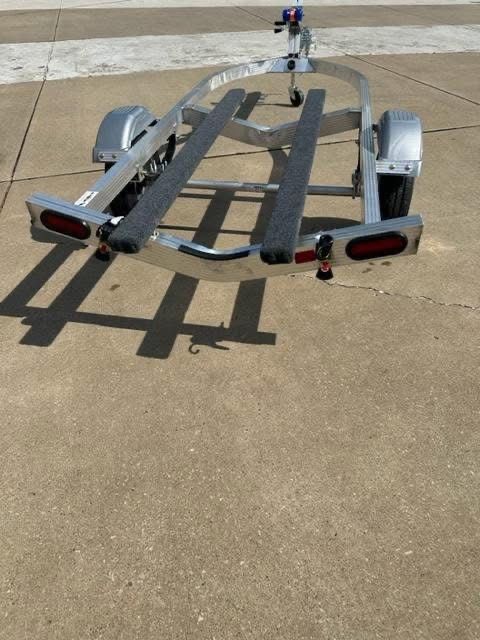
Types of jet ski trailers
| Type | Carries | Best for |
|---|---|---|
| Single | One ski | Most owners, easy towing and storage |
| Double | Two skis side by side | Families and couples with two skis |
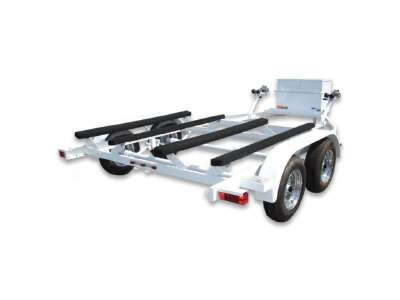
| Tilt or extended | One or two skis, longer frame | Steep ramps, larger skis, extra gear |
| Combination or utility | Ski plus storage | Riders who carry lots of gear |
Most owners choose a single trailer. If you have two skis, a double trailer is often cheaper and easier than towing two singles, though it is wider and heavier.
11 essential tips for choosing a jet ski trailer
1. Match the trailer to your ski’s size and weight
Check your ski’s length, width and dry weight, then add fuel, gear and accessories. Choose a trailer with a load capacity comfortably above the total. A trailer that is too small or too weak is unsafe and can damage the hull.
2. Choose the right material
Galvanized steel is strong, affordable and resists rust well when looked after. Aluminum is lighter and naturally corrosion-resistant, which makes it popular for salt water use, but it often costs more. Painted steel is cheapest but rusts quickly in salt water.
3. Pick bunks or rollers
Carpeted bunks support the hull evenly and are the most common choice for jet skis. Rollers make launching and loading easier on shallow ramps but put more pressure on specific points. Most PWC owners prefer bunks, adjusted to fit the hull’s shape.
4. Check the axle and suspension
Torsion axles give a smooth ride and need little maintenance. Leaf spring axles are simple and easy to repair. Make sure the axle rating matches the load.
5. Look for sealed, submersible lights
Trailer lights get dunked every time you launch. Sealed LED lights last much longer than traditional bulbs and are far more reliable.
6. Consider bearing protection
Wheel bearings are the most common failure point on boat and PWC trailers. Bearing protectors and regular greasing help keep water out and prevent breakdowns.
7. Check the winch and bow stop
A good winch with a strong strap and a properly positioned bow stop makes loading easy and keeps the ski secure.
8. Think about tongue length
A longer tongue lets you back further down steep ramps without getting your vehicle’s rear wheels wet. Some trailers offer extendable tongues.
9. Check your vehicle’s towing capacity
Add the trailer weight to the ski and gear weight, and make sure your vehicle can tow it safely. Check the hitch class and ball size too.
10. Consider brakes
Most single PWC trailers are light enough not to need brakes, but heavier double trailers may. Requirements depend on weight and state law, so check what applies to you.
11. Plan for registration
Trailers used on public roads in California generally need to be registered with the California DMV and display a plate. Ask the seller for the paperwork you need.
Galvanized vs. aluminum jet ski trailers
Material is the biggest decision for most buyers, especially if you ride in salt water like San Francisco Bay.
| Galvanized steel | Aluminum | Painted steel | |
|---|---|---|---|
| Corrosion resistance | Good | Excellent | Poor in salt water |
| Weight | Heavier | Lighter | Heavier |
| Strength | High | High for its weight | High |
| Price | Moderate | Higher | Lowest |
| Best for | Most riders, fresh or salt water | Frequent salt water use | Fresh water only |
If you launch in salt water often, aluminum or high-quality galvanized steel is the best choice. Rinse the trailer with fresh water after every launch either way.
How to set up your PWC trailer
A properly adjusted trailer protects your hull and makes loading easier. When you first get a trailer, take time to set it up for your ski.
- Position the bunks: they should support the hull along its strongest areas, usually near the keel and chines, without touching the intake grate or ride plate.
- Set the bow stop: the ski’s bow eye should sit snugly against the stop with the hull fully supported by the bunks.
- Check the balance: aim for a tongue weight around 10 percent of the total load for stable towing.
- Adjust the winch: the strap should pull straight to the bow eye without rubbing on the hull.
- Fit stern straps: secure the rear of the ski to the trailer frame before every trip.
If you are unsure, ask the dealer to set up the trailer for your specific ski. A few minutes of adjustment can prevent hull damage over thousands of miles.
Towing tips for jet ski trailers
- Check tire pressure, lights and hitch connections before every trip.
- Cross the safety chains under the tongue and attach them securely.
- Use bow and stern straps to stop the ski from moving.
- Remove loose items from the ski so they do not fly out on the highway.
- Drive smoothly, brake early and allow extra stopping distance.
- Take wider turns to avoid clipping curbs with the trailer wheels.
- Practice reversing in an empty parking lot before your first launch.
Remember that trailers reduce your vehicle’s performance and stopping power. Drive within the speed limit for towing in your state and leave plenty of space.
Launching and loading made easy
Launching
Prepare the ski in the parking area: remove the cover and stern straps, attach a dock line and insert the drain plugs if your ski has them. Back slowly down the ramp until the ski floats. Release the winch strap, push the ski off and hold it by the dock line, then park your vehicle.
Loading
Back the trailer in until the bunks are partly submerged. Idle the ski gently onto the bunks, attach the winch strap and winch it snug to the bow stop. Pull out slowly, then attach the stern straps in the parking area. Brake and reverse systems make this much easier.
Jet ski trailer maintenance checklist
A trailer spends its life getting wet and bouncing down roads, so regular care is essential. Use this checklist to keep your jet ski trailer safe and reliable.
| When | What to check |
|---|---|
| After every launch | Rinse the frame, axle, springs, hubs and lights with fresh water |
| Before every trip | Tire pressure, lights, hitch, safety chains, straps and winch |
| Monthly in season | Wheel bearings for play or noise, bunk carpet, bolts and rollers |
| Every season | Repack or service bearings, check brakes if fitted, inspect for rust and cracks |
| As needed | Replace worn tires, frayed straps, cracked lights and torn carpet |
Wheel bearings deserve special attention. Water can enter hot bearings when you back into cold water, causing rust and failure. Bearing protectors, regular greasing and letting hubs cool before launching all help.
Common jet ski trailer problems and fixes
Lights not working
The usual culprit is a corroded connector or a broken ground wire. Clean the plug contacts, use dielectric grease and check the ground connection to the frame. Upgrading to sealed LED lights reduces future problems.
Bearing failure
A hot, noisy or wobbly wheel often means a bearing problem. Stop and check it immediately. Replace damaged bearings and seals, and grease them properly.
Rust
Surface rust on galvanized steel can be cleaned and treated. Deep rust on structural parts weakens the trailer and needs professional assessment.
Hull damage from poor bunk setup
Pressure marks or cracks on the hull can come from badly positioned bunks. Readjust the bunks so they support the hull evenly.
Single vs. double trailers: which should you buy?
If you own one ski, a single trailer is simpler, lighter and easier to store and maneuver. If you own two skis, a double trailer saves money, registration and parking space compared with two singles. However, double trailers are wider and heavier, and they need a capable tow vehicle.
Some owners choose two single trailers for flexibility, so each ski can be towed separately. Think about how you usually ride. If both skis always travel together, a double makes sense. For more on owning two skis, read our guide to a pair of jet skis for sale.
Trailer accessories worth adding
- Bearing protectors and a grease gun.
- A spare tire and wheel mounted to the frame.
- Guide-on posts that help you center the ski when loading.
- A swing-away tongue to save garage space.
- A trailer lock and hitch lock for security.
- A step or walkboard for easier access to the bow.
- Covers and other jet ski accessories.
New vs. used jet ski trailers
A new trailer gives you a known condition, a warranty and the right size for your ski. A used trailer can save money, but check it carefully for rust, worn tires, bad bearings, faulty lights and missing paperwork. A cheap trailer that fails on the highway can cost far more than it saved.
Choosing a trailer for San Francisco Bay launches
Bay Area ramps vary a lot. Some are steep, some are shallow and many are exposed to salt water, wind and tidal swings. A few trailer features make life easier here.
- Aluminum or high-quality galvanized frames to resist salt corrosion.
- Sealed LED lights that survive repeated dunking.
- Bearing protectors and easy access for greasing.
- A longer or extendable tongue for shallow ramps at low tide.
- Guide-on posts to help line up the ski in wind and current.
Check the tide predictions before you launch. At low tide, some ramps become very shallow, and a longer tongue or a tilt feature can make a big difference.
Storing your PWC trailer
When the trailer is not in use, store it with the ski on board under a cover, ideally in a garage or carport. Chock the wheels, relieve pressure on the tires if it will sit for a long time and keep the hitch and lights protected from the weather. If you store it outside, a trailer lock adds security.
Before the season starts, give the trailer a full check: tires, bearings, lights, winch, straps and bunks. Spring is the busiest time at the ramp, and you do not want a trailer problem to spoil your first ride of the year.
Safety on the road
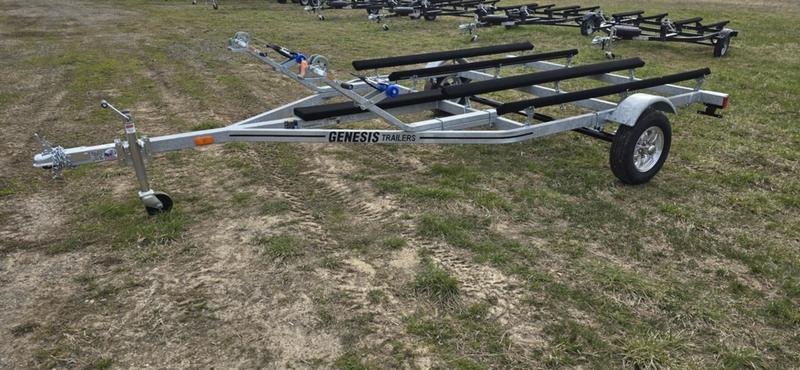
Towing safely starts before you leave the driveway. Walk around the rig and check that the coupler is locked onto the ball, the pin or latch is secure, the safety chains are crossed and attached, and the lights work. Make sure the ski is strapped down at the bow and stern, and that the seat and storage lids are latched.
On the road, drive smoothly and leave extra stopping distance. Avoid sudden lane changes, and slow down well before turns and ramps. In crosswinds, a light trailer can sway, so reduce speed and keep a firm grip on the wheel. If the trailer starts to sway, ease off the accelerator rather than braking hard.
Stop after the first few miles of any trip to check the straps, hitch and wheel hubs. A hub that feels very hot compared with the others can signal a bearing problem that needs attention before you continue.
Upgrading an older trailer
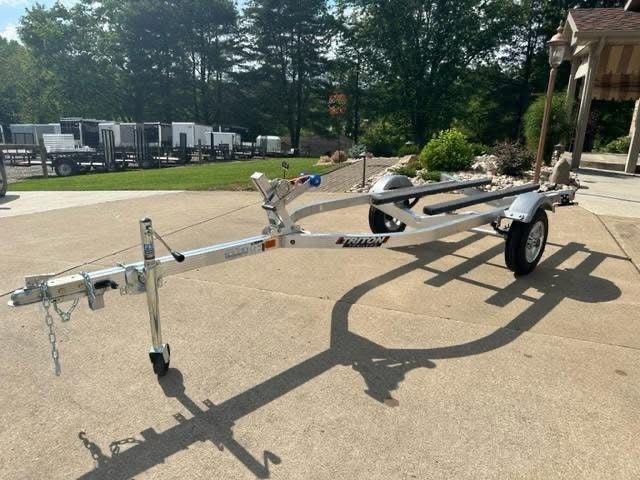
An older trailer can often be improved without replacing it. Fresh bunk carpet protects the hull, new LED lights improve reliability, and replacing worn tires and bearings restores safety. Adding guide-on posts and a new winch strap can make loading much easier. If the frame is solid and the axle is in good condition, these upgrades can give an older trailer many more years of service.
However, if the frame has deep rust, cracked welds or a bent axle, replacement is the safer choice. The trailer carries an expensive ski at highway speed, so it is not the place to cut corners.
Budgeting for a trailer
Trailer prices depend on size, material and features. A simple single galvanized trailer is the most affordable option, while aluminum frames, double trailers, extended tongues and premium fittings add to the cost. Remember to budget for registration, a spare tire, a lock and a few maintenance items such as grease, bearing protectors and replacement straps.
It is often worth spending a little more for better corrosion resistance and sealed lights, especially if you launch in salt water. These features reduce maintenance and help the trailer hold its value. When you buy a ski and trailer together, you can also be sure the trailer is sized correctly for the hull from day one.
Finally, consider resale. A matched ski and trailer package is attractive to buyers, so keeping your trailer in good condition helps when you eventually upgrade.
Practice makes perfect
Reversing a short trailer is trickier than reversing a long one, because it reacts quickly to small steering inputs. Spend half an hour in an empty parking lot practicing. Place your hand at the bottom of the steering wheel and move it in the direction you want the trailer to go. Make small corrections, go slowly and use a spotter at busy ramps. With a little practice, launching becomes quick, calm and routine, and you will spend more time on the water and less time at the ramp.
Once you are comfortable, practice with a passenger acting as a spotter. Agree on simple hand signals for stop, left and right before you start, and keep the windows down so you can hear each other clearly at the ramp.
A calm, practiced launch also keeps the ramp moving for everyone else, which other boaters always appreciate on a busy summer morning.
Jet ski trailer FAQs
What size trailer do I need for my jet ski?
Match the trailer’s length and capacity to your ski’s length and loaded weight, with some margin. The trailer maker or dealer can confirm compatibility for your model.
Do I need brakes on a jet ski trailer?
Many single PWC trailers are light enough not to require brakes, but requirements depend on weight and state law. Heavier double trailers may need them.
Do jet ski trailers need to be registered?
In California, trailers used on public roads generally must be registered with the DMV. Check current requirements when you buy.
How often should I grease trailer bearings?
Check them regularly during the season and service them at least once a year, or more often if you launch in salt water frequently.
Can I use a boat trailer for a jet ski?
Only if it is sized and adjusted correctly for the ski’s hull. A dedicated PWC trailer is usually the safer and better-fitting choice.
Find the right jet ski trailer at Hayling Jetsport
The right trailer makes every trip to the water smoother and safer. At Hayling Jetsport in San Francisco, you can browse jet ski trailers for sale, including single and double models, and add one to the same order as your ski. Browse jet skis for sale and accessories too, and email sale@haylingjetsport.org if you need help choosing the right trailer for your ski.
Leave a Reply