A stand up jet ski is the purest form of personal watercraft riding. Instead of sitting on a seat, you stand or kneel on a narrow tray and steer with your whole body. It is physical, demanding and incredibly rewarding. Once you learn, few rides on the water feel as connected, athletic or exciting.
In this guide, we explain how stand up jet skis work, compare today’s main models, look at who they suit and share seven proven tips to help you master the ride. If you have only ridden sit-down skis, get ready for something completely different.
A short history of the stand up jet ski
The original Jet Ski was a stand-up machine. Kawasaki introduced its first Jet Ski in the early 1970s, and the brand name became so famous that many people now call every personal watercraft a jet ski. For years, stand-up skis dominated the sport, especially in racing and freestyle. Sit-down skis later took over the mass market, but stand-ups remain popular with riders who love skill, fitness and freestyle tricks.
How is a stand up jet ski different?
| Stand up jet ski | Sit-down jet ski | |
|---|---|---|
| Riding position | Standing or kneeling | Seated |
| Riders | One | One to three |
| Skill needed | High | Low to moderate |
| Fitness needed | High | Low |
| Handling | Very agile, body-steered | Stable and predictable |
| Best for | Skill, freestyle, racing | Cruising, touring, families |
On a stand-up ski, the handlebar pole pivots at the front, so you lean, shift your weight and use your legs to carve turns. At rest, many stand-ups are not stable enough to sit on, so you spend more time in the water when learning.
Today’s stand up jet skis
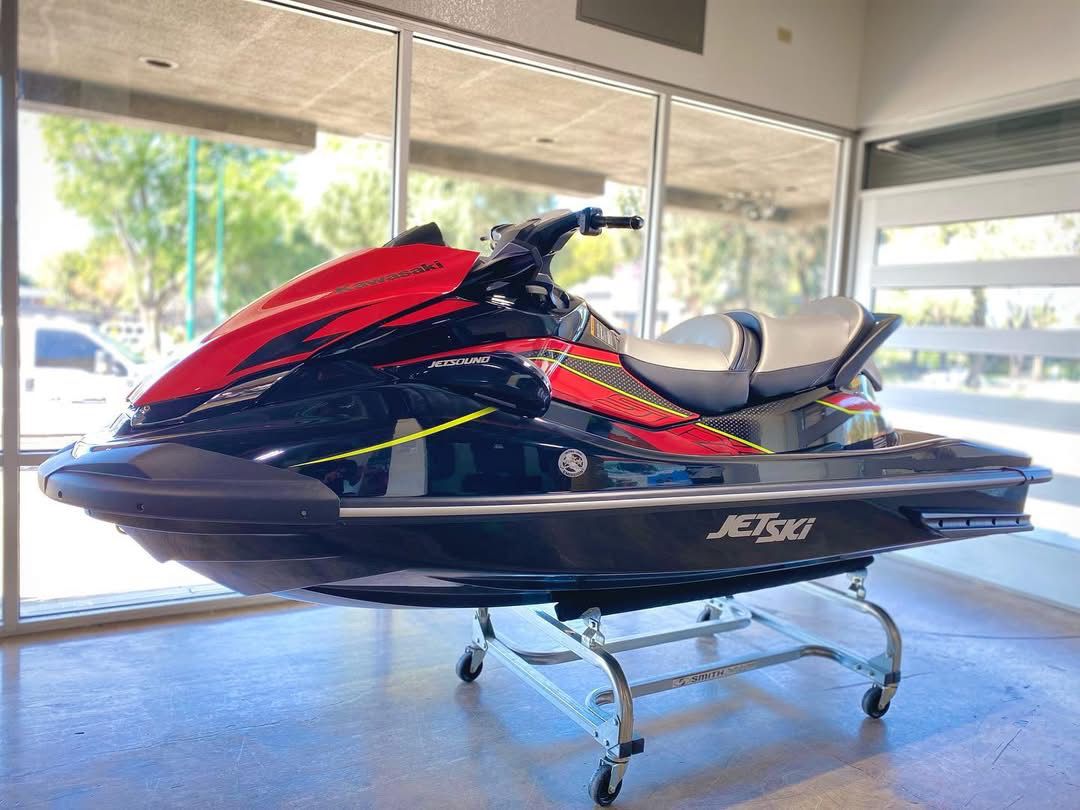
Kawasaki SX-R
The Kawasaki SX-R is a modern four-stroke stand-up with a powerful four-cylinder engine. It is heavier and more stable than older two-stroke stand-ups, which makes it more approachable for learning, while still offering plenty of performance for experienced riders. See the latest details on the official Kawasaki SX-R page.
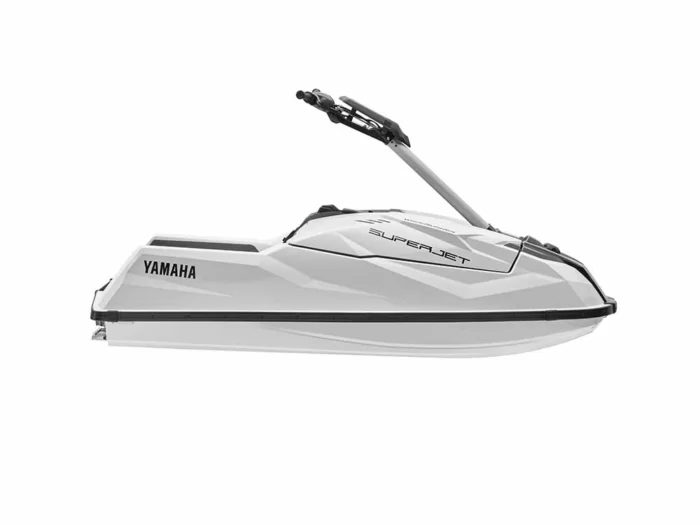
Yamaha SuperJet
The Yamaha SuperJet is a legend in the stand-up world. Modern versions use a compact Yamaha engine and a lighter hull designed for agility and freestyle. It is a favorite with riders who want to learn tricks and enjoy playful riding.
Who should ride a stand up jet ski?
- Riders who want a physical, athletic experience.
- Anyone interested in freestyle tricks or racing.
- Experienced sit-down riders looking for a new challenge.
- Riders who usually ride alone.
- People who enjoy learning a skill and practicing regularly.
If you want to carry passengers, cruise for hours or relax on the water, a sit-down ski is a better choice. Many families own both: a touring ski for group rides and a stand-up for skill sessions.
7 proven tips to master a stand up jet ski
1. Start in calm, deep water
Choose a calm, quiet area with deep water and no obstacles. You will fall often at first, and calm water makes getting back on much easier.
2. Learn to start from the water
Beginners usually start in the water. Hold the handlebars with the pole down, kick your legs to the back of the tray, squeeze the throttle gently and let the ski pull you up onto your knees. Then rise to your feet as the ski gains speed.
3. Keep your knees bent
Bent knees absorb bumps and help you balance. Stiff legs make the ski feel twitchy and unstable.
4. Look where you want to go
Your body follows your eyes. Look through the turn, not at the water in front of the ski.
5. Use your body to steer
Lean into turns, shift your weight and use the handlebars together. Small movements make a big difference on a stand up jet ski.
6. Keep some throttle in turns
Like any jet ski, a stand-up needs throttle to steer. Letting go mid-turn will make the ski go straight.
7. Build fitness and practice often
Riding a stand up jet ski works your legs, core and arms. Short, frequent sessions build strength and skill faster than occasional long rides.
Safety for stand-up riders
- Always wear a U.S. Coast Guard-approved life jacket.
- Attach the lanyard to your wrist or life jacket, so the engine stops if you fall.
- Wear gloves, water shoes and eye protection.
- Ride away from swimmers, boats and docks while learning.
- Ride with a friend or in sight of someone on shore.
- Know the local rules for PWC use and speed limits.
In California, PWC operators must be at least 16 and generally need a California Boater Card. Stand-up skis count as PWCs, so the same rules apply. Learn more about safe riding from the U.S. Coast Guard Boating Safety program.
Kawasaki SX-R vs. Yamaha SuperJet
| Kawasaki SX-R | Yamaha SuperJet | |
|---|---|---|
| Feel | Heavier, more stable, powerful | Lighter, nimble, playful |
| Learning curve | More forgiving for beginners | More demanding at first |
| Best for | Fast riding, rough water, learning | Freestyle and tricks |
| Engine | Larger four-cylinder | Compact Yamaha engine |
Both are excellent. The SX-R’s extra weight and power make it easier to learn on and better in chop. The SuperJet’s lighter, more nimble feel suits freestyle riders. If you can, try both.
Stand-up jet ski gear
- A comfortable, well-fitting life jacket designed for active riding.
- Riding gloves for grip.
- Water shoes or booties with good traction.
- A wetsuit for cold water and protection when you fall.
- Knee pads or a padded tray mat for comfort.
- Eye protection such as sports sunglasses with a strap.
Maintaining a stand-up ski
Stand up jet skis need the same basic care as sit-down skis. Flush the engine after salt water rides, rinse the hull and tray, check the oil, inspect the impeller and keep the battery charged. Because stand-ups are often ridden hard and fall over frequently, check for water in the hull and damage to the handlebar pole and steering components after each session.
Buying a stand up jet ski
When you are ready to buy a stand up jet ski, decide between new and used. New models offer modern four-stroke engines, warranties and reliability. Used stand-ups can be cheaper, but many older models have two-stroke engines and may have been ridden hard. Inspect used skis carefully for hull damage, water in the hull, pump wear and steering problems.
- Check the handlebar pole pivot for play or damage.
- Inspect the hull for cracks, especially near the bow and tray.
- Look into the pump for impeller and wear ring damage.
- Check for water in the hull after a test ride.
- Ask about modifications, which are common on stand-ups.
- Review service history and engine hours.
Browse Kawasaki jet skis for sale, Yamaha WaveRunners and pre-owned skis at Hayling Jetsport. For general advice, read our used jet ski inspection checklist.
Where to ride a stand-up in the Bay Area
Stand up jet skis are at their best in calm water where you can practice turns and tricks. Look for sheltered coves, quiet marinas with access to open water, the waterways of the Delta and inland lakes. On San Francisco Bay, afternoon wind and chop can make stand-up riding challenging, so mornings are usually best. Always check the marine forecast and local rules before you launch.
Freestyle and racing
Many stand-up riders progress to freestyle tricks such as barrel rolls, submarines and spins, or join local racing events. Freestyle requires advanced skill and often modified skis, while racing focuses on speed and cornering on a set course. If you are interested, look for local clubs and organized events, where you can learn from experienced riders in a safe environment. The Personal Watercraft Industry Association is a useful starting point for learning more about the wider PWC community.
Your first session: a step-by-step plan
A structured first session helps you learn faster and stay safe. Here is a simple plan for your first day on a stand up jet ski.
- Warm up on land: stretch your legs, back and shoulders. Stand-up riding is physical.
- Learn the controls: find the start button, throttle and lanyard before you get in the water.
- Practice kneeling starts: start in the water, let the ski pull you onto your knees and ride slowly in a straight line.
- Try standing: once comfortable kneeling, rise to your feet at low speed with knees bent.
- Practice gentle turns: lean slightly and use small handlebar movements.
- Practice falling and restarting: it will happen often, so get comfortable with it.
- Rest often: short sessions with breaks prevent fatigue and mistakes.
By the end of the first day, most riders can stand and ride in a straight line. Turns and confidence come with each session.
Common beginner mistakes
Too much throttle too soon
Squeezing hard on the throttle at the start often throws the rider off the back. Build speed gradually.
Standing up too early
Rising before the ski has enough speed makes it unstable. Wait until it is moving smoothly, then stand.
Locked knees
Straight legs make balancing much harder. Keep your knees bent and relaxed.
Looking down
Watching the front of the ski makes you wobble. Look ahead to where you want to go.
Building strength for stand-up riding
Fitness makes a big difference. Leg strength helps you stay low and absorb bumps, core strength keeps you balanced and grip strength helps on long sessions. Squats, lunges, planks and grip exercises all help. Swimming builds endurance and confidence in the water, which is useful when you fall. Many riders find that stand-up riding becomes one of their favorite workouts.
Why stand-ups are so addictive
Once you get the hang of it, a stand up jet ski feels like an extension of your body. Every turn takes skill, every clean run feels earned and every session teaches you something new. That challenge is exactly why many riders keep a stand-up alongside a sit-down ski, and why some never go back.
Costs of owning a stand-up
Stand up jet skis are generally cheaper to buy and run than large touring skis. They use less fuel, need a smaller trailer and are easier to store. However, they can need more frequent repairs if ridden hard, especially if you practice tricks. Budget for regular servicing, replacement impellers, handlebar pole bushings and protective gear.
Insurance is usually reasonable, though high-performance or modified stand-ups may cost more to insure. Registration costs are the same as for any PWC in California. Overall, a stand up jet ski offers great value for riders who want maximum fun from a compact, affordable machine.
Stand-ups for teenagers and young riders
Many young riders are drawn to stand-ups because of their athletic feel. In California, no one under 16 may operate a PWC, including stand-ups. Once riders are old enough and hold a California Boater Card, a stand-up can be a fantastic way to build skill and fitness. Start with supervision, calm water and a heavier, more forgiving model, and always insist on proper safety gear.
Comparing stand-ups with sit-down sport skis
If you want agility without standing, sporty sit-down skis such as the Yamaha JetBlaster or Sea-Doo Spark Trixx offer playful, trick-friendly handling while still giving you a seat. They are a good middle ground for riders who want some of the stand-up feel with more stability and the option to carry a passenger.
Joining the stand-up community
One of the best parts of stand-up riding is the community. Riders tend to be enthusiastic, welcoming and happy to share tips. Local clubs organize group rides, training sessions and friendly competitions, and online groups are full of advice on technique, maintenance and upgrades. Joining a group is one of the fastest ways to improve, and it is a great way to find riding partners for safer sessions.
Watch experienced riders closely, ask questions and practice what you learn. Many stand-up riders say the friendships they make on the water are as rewarding as the riding itself. Whether you want to race, learn freestyle or simply enjoy carving turns on a calm morning, the stand-up community will help you get there.
Before you join a group ride, make sure your ski is well maintained and your safety gear is in good condition. Experienced riders will appreciate it, and you will be able to focus on learning rather than worrying about breakdowns. Bring water, snacks and a positive attitude, and do not be afraid to say if you need to slow down or rest.
Everyone started as a beginner, and most riders are glad to help newcomers improve. Ask for feedback after each session, note one thing to work on next time and celebrate small wins along the way.
Progress on a stand up jet ski comes quickly when you ride often and stay patient.
Stand up jet ski FAQs
Is a stand up jet ski hard to ride?
Yes, at first. Expect to fall often while you learn balance and starting. With practice, it becomes natural and incredibly fun.
Can you sit on a stand up jet ski?
Most stand-ups do not have seats. You can kneel on the tray, especially when starting or idling.
Are stand up jet skis good for beginners?
They are not the easiest first ski. Beginners usually learn faster on a sit-down ski, then move to a stand-up for a new challenge. A heavier stand-up like the SX-R is more forgiving.
Can two people ride a stand-up?
No. Stand up jet skis are designed for one rider only.
Do stand-up skis need registration?
Yes. They are personal watercraft and must be registered like any other PWC in California.
Ready to ride a stand up jet ski?
A stand up jet ski offers a raw, athletic and rewarding experience unlike any other personal watercraft. It takes practice, patience and fitness, but the payoff is a ride that feels truly connected to the water. Start in calm water, wear the right gear, build your skills step by step and ride safely.
At Hayling Jetsport in San Francisco, you can browse Kawasaki jet skis, including the SX-R, as well as Yamaha models and riding accessories. Want to compare with sit-down models first? Read our Kawasaki jet ski guide or our list of the best jet ski models. Questions? Email sale@haylingjetsport.org.
Stand-up riding techniques to learn next
Once you can ride comfortably, there is always more to learn. These techniques build on the basics and keep stand-up riding exciting for years.
- Tight carving turns: lean harder, bend lower and keep steady throttle to carve sharp arcs.
- Riding chop: stay loose, absorb bumps with your legs and keep the bow light.
- Wake jumping: start small, approach straight and keep your knees soft on landing.
- Slalom runs: set up buoys in a safe area and practice linked turns.
- Beginner freestyle: learn controlled spins and submarines with guidance from experienced riders.
Progress gradually, wear protective gear and never attempt advanced tricks near other people, boats or docks. Riding with a club or experienced friends is the safest way to learn new skills.
Transporting a stand-up
Stand up jet skis are smaller and lighter than most sit-down skis, which makes them easy to tow on a single trailer. Some riders even carry two stand-ups on a double trailer. Secure the ski with bow and stern straps, protect the handlebar pole from bouncing during transport and check the trailer’s lights and tires before every trip.
Leave a Reply