A jet ski lift keeps your ski out of the water when you are not riding. Instead of leaving it floating at a dock or hauling it out on a trailer after every ride, you simply drive on, lift it clear of the water and step off. It protects the hull, cuts down on cleaning and makes heading out for a quick ride effortless.
In this guide, we compare the six main types of jet ski lifts, explain costs and installation, and share nine essential tips for choosing the right PWC lift for your waterfront, dock or boathouse.
Why use a jet ski lift?
- Protects the hull: keeping the ski out of the water prevents marine growth, staining and blistering.
- Reduces corrosion: less time in salt water means less corrosion on the pump, cooling system and fittings.
- Saves time: no trailering for every ride, and less cleaning.
- Prevents damage: the ski is protected from waves, wakes and rubbing against the dock.
- Improves security: a lifted ski is harder to steal, especially with a lock.
- Makes riding easier: quick access encourages more frequent rides.
The 6 main types of jet ski lifts
| Type | How it works | Best for |
|---|---|---|
| Floating drive-on | A floating cradle you drive onto, which holds the ski above the water | Docks with changing water levels, easy installation |
| Hydraulic | Hydraulic arms raise and lower the ski | Fixed docks, smooth operation |
| Electric | Electric motor lifts the ski, often via cables | Fixed docks and boathouses with power |
| Manual | Hand crank or lever raises the ski | Low-cost setups, occasional use |
| Freestanding | Stands on the lake or seabed, independent of the dock | Shallow water and stable bottoms |
| Boathouse or cable lift | Ski hangs from slings inside a boathouse | Covered storage with overhead support |
Floating drive-on lifts
Floating drive-on lifts, often called ports, are among the most popular options. You idle onto the cradle and the ski slides up and out of the water. They rise and fall with the water level, which makes them ideal for tidal areas and lakes with changing levels.
Hydraulic lifts
Hydraulic lifts use hydraulic pressure to raise and lower the ski smoothly. They are often mounted to fixed docks and can be operated with a button or remote.
Electric lifts
Electric lifts use a motor and cables or arms to lift the ski. They need a power supply at the dock, but they make lifting effortless.
Manual lifts
Manual lifts use a hand crank or lever. They are cheaper and simpler, but they take more effort and time.
Freestanding lifts
Freestanding lifts sit on legs on the lake or seabed. They work best in shallow water with a firm bottom and stable water levels.
Boathouse and cable lifts
In a boathouse, a ski can be lifted on slings attached to overhead beams. This protects it from sun and weather as well as water.
9 essential tips for choosing a jet ski lift
1. Know your ski’s weight
Check your ski’s dry weight, then add fuel, gear and accessories. Choose a lift rated comfortably above that total. Touring and fishing skis are much heavier than recreation skis.
2. Understand your water levels
Tidal water like San Francisco Bay can rise and fall several feet each day. Floating lifts handle this easily. Fixed lifts need enough travel to work at every tide. Check NOAA tide predictions for your location.
3. Check the depth and bottom
Freestanding lifts need a firm bottom and the right depth. Floating lifts need enough depth at low tide for the ski to float on and off.
4. Match the lift to your dock
Some lifts attach to fixed docks, others connect to floating docks, and some stand alone. Make sure your dock can support the lift and the ski.
5. Choose the right material
For salt water, choose corrosion-resistant materials such as marine-grade aluminum, stainless hardware and UV-stable polyethylene.
6. Decide between power and manual
If you ride often, a powered or floating drive-on lift saves time and effort. For occasional use, a manual lift may be enough.
7. Think about ease of use
A good jet ski lift should be simple enough that you use it after every ride. Drive-on lifts are the quickest, while some hydraulic and electric lifts can be operated with a remote.
8. Check permits and rules
Docks and lifts on public waterways often need approval. Around San Francisco Bay, shoreline structures can require permits from regional and local agencies, and marinas usually have their own rules. Lake associations and homeowner associations may also set requirements. Always check before you buy or install.
9. Plan for installation and maintenance
Some lifts are easy for owners to install, while others need a professional. Ask about installation, warranty and routine maintenance before you buy.
How much does a jet ski lift cost?
Prices vary widely depending on type, capacity and materials. Simple manual lifts and basic floating ports sit at the lower end, while hydraulic, electric and heavy-duty floating lifts for large touring skis cost more. Installation, permits, power supply and dock modifications add to the total.
| Type | Relative cost | Notes |
|---|---|---|
| Manual | Lowest | Simple and reliable, but more effort |
| Floating drive-on | Low to moderate | Popular, easy to use, handles tides |
| Freestanding | Moderate | Depends on depth and bottom conditions |
| Electric | Moderate to high | Needs power at the dock |
| Hydraulic | Higher | Smooth and convenient |
| Boathouse | Varies | Depends on the structure |
When you compare prices, think about how long the lift will last and how much it will save you in cleaning, hull repairs and trailer time.
Jet ski lift vs. leaving your ski in the water
Leaving a ski floating at the dock might seem simple, but it causes problems over time. Marine growth builds on the hull and in the intake, reducing performance. Salt water speeds up corrosion. Wakes and waves can rub the ski against the dock. Water can also find its way into the hull. A jet ski lift avoids all of these problems.
Jet ski lift vs. trailer storage
| Jet ski lift | Trailer storage | |
|---|---|---|
| Convenience | Drive on and off at your dock | Launch and retrieve each time |
| Hull protection | Excellent | Excellent |
| Flexibility | Ride from one location | Ride anywhere you can tow |
| Cost | Lift and installation | Trailer and towing vehicle |
| Best for | Waterfront homes and marinas | Riders who travel to different spots |
Many owners use both: a lift at home and a jet ski trailer for trips to other lakes and bays.
How to use a jet ski lift safely
- Approach slowly at idle speed, lined up with the center of the lift.
- Use gentle throttle to drive the ski onto the cradle or bunks.
- Stop the engine and attach the safety strap or bow line.
- Raise the lift fully, if powered or manual, before stepping off.
- Remove the lanyard and secure the ski with a lock if needed.
- To launch, lower the lift, check the area behind you and reverse off slowly.
Brake and reverse systems, such as Sea-Doo’s iBR and Yamaha’s RiDE, make it much easier to get on and off a lift with control.
Maintaining your PWC lift
A lift sits in the water all year, so it needs regular care, especially in salt water.
- Rinse the lift with fresh water when you can, especially moving parts.
- Check bolts, brackets and fittings for corrosion and tighten them as needed.
- Inspect bunks and padding for wear that could scratch the hull.
- Grease moving parts according to the manufacturer’s guidance.
- Check cables, hoses and hydraulic fluid on powered lifts.
- Clear weed, shells and debris from floating cradles.
- Inspect floats for cracks or water inside.
A well-maintained PWC lift can last many years and keep protecting your ski every time you ride.
Choosing a lift for different skis
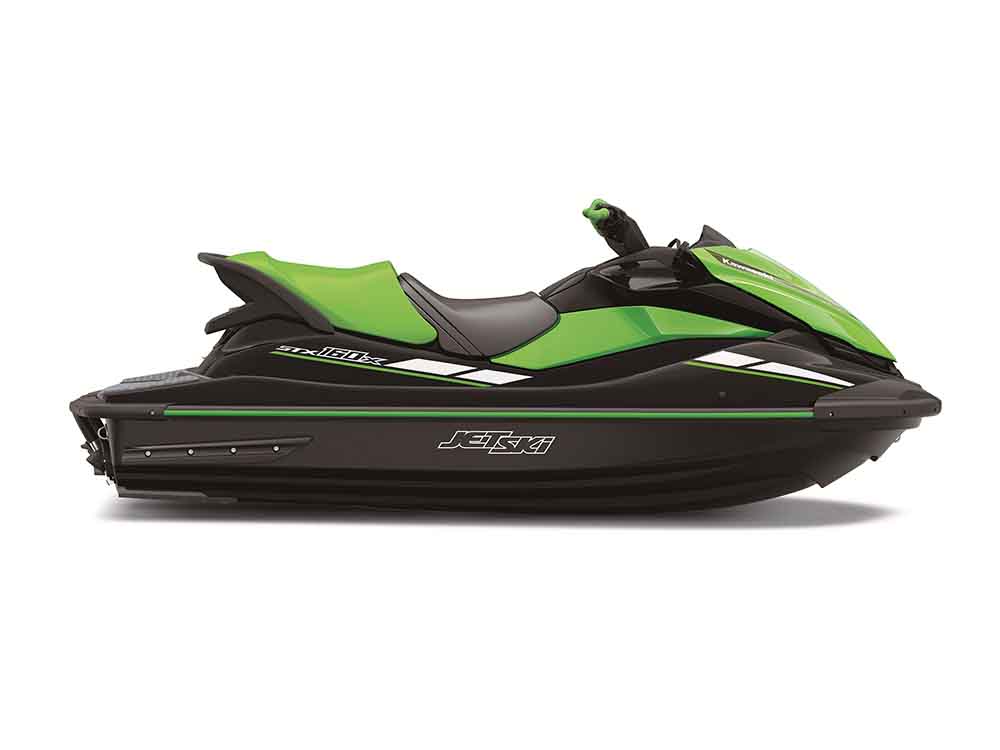
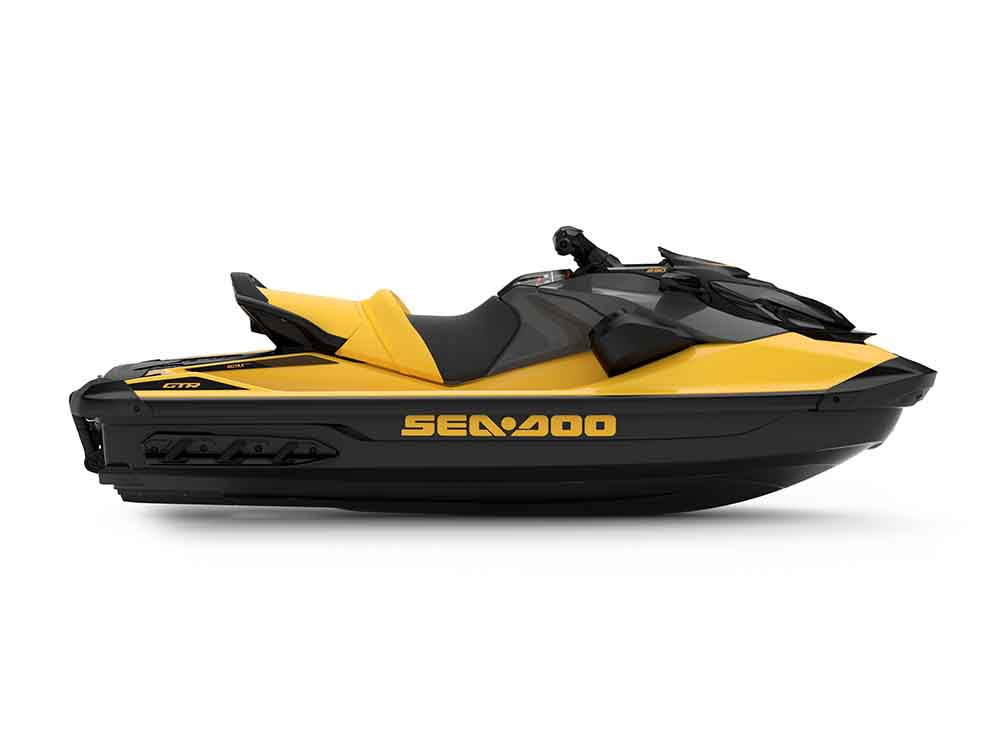
The right lift depends on the ski you own. Light recreation skis such as the Sea-Doo Spark and Yamaha EX can use smaller, lighter lifts. Heavier touring and fishing skis, such as the Sea-Doo GTX, Yamaha FX, Kawasaki Ultra and Sea-Doo Fish Pro, need lifts with higher capacity and wider cradles. If you own two skis, consider a double lift or two singles side by side.
If you upgrade your ski later, check that your existing lift can handle the new weight and hull shape.
Planning your installation
Good planning makes installation smoother and avoids expensive mistakes. Start by measuring the space at your dock, including the width available, the water depth at the lowest tide and the distance from the dock edge. Note any obstacles such as pilings, rocks, moorings or neighboring boats. Photograph the area at both high and low tide.
Next, check access. How will you get the lift components to the water? Floating sections can often be launched from a ramp or beach, while heavier freestanding or hydraulic lifts may need a barge or crane. If you need power for an electric or hydraulic system, plan the cable route and use marine-rated equipment installed by a qualified electrician.
Finally, think about how you will approach the lift. Wind, current and wakes from passing boats all affect docking. Position the lift so you can approach into the wind or current where possible, with enough space to maneuver. A well-placed jet ski lift is far easier to use every day.
Seasonal care and storms
Weather can be hard on waterfront equipment. Before storms, raise the ski fully, add extra lines and remove loose items such as covers that could catch the wind. After storms, inspect the lift, floats and fittings for damage. In areas where water freezes, follow the manufacturer’s winter guidance, which may include removing the ski and protecting moving parts.
In the Bay Area, winter storms and king tides can bring unusually high water. Check that your lift and dock can cope with the highest expected levels, and keep an eye on forecasts during the stormy months.
Security for lifted skis
A lifted ski is less tempting to thieves than one floating at the dock, but it still needs protection. Remove the lanyard or key, lock the ski to the lift with a heavy-duty cable or chain, and consider motion-sensor lighting or a camera. Some owners also fit GPS trackers for extra peace of mind. Good security can also help reduce insurance costs.
Accessories that make lifts easier
- Guide posts or bumpers that center the ski as you approach.
- Non-slip walk pads for stepping on and off safely.
- A remote control for powered lifts.
- Solar charging kits for lifts without mains power.
- Fitted covers designed to be used while the ski sits on the lift.
Small additions like these make daily use quicker, safer and more enjoyable.
Common mistakes to avoid
Buying a lift that is too small
An undersized lift strains its components and may not support the hull properly. Always leave a safety margin above your ski’s loaded weight, and remember that you might upgrade to a heavier ski later.
Ignoring the tide range
A fixed lift that works perfectly at mid-tide may leave your ski stranded or underwater at the extremes. Measure the full range before choosing, or pick a floating design.
Poor hull support
Bunks or cradles that do not match the hull shape can create pressure points. Adjust the supports carefully and check them after the first few uses.
Skipping maintenance
Corroded bolts and worn parts can fail without warning. A quick monthly check during the riding season prevents most problems.
Forgetting about neighbors and rules
Installing without the right approvals can lead to fines or orders to remove the lift. Talk to your marina or local authority first, and consider how the lift affects neighboring docks and views.
Lifts for marinas and shared docks
If you keep your ski in a marina, ask what types of lifts are allowed. Many marinas offer floating drive-on lifts in their slips or have approved suppliers. Shared docks may have space limits and rules on installation, so agree on a plan with the dock owner or association before you buy a jet ski lift.
Getting the most from your lift
Once your lift is installed, build a simple routine around it. After each ride, rinse the ski while it sits on the lift, flush the engine if you rode in salt water, then raise the ski fully and fit the cover. Remove the lanyard, lock the ski and check that lines and straps are secure. This routine takes only a few minutes, and it keeps both the ski and the lift in excellent condition.
Many owners find they ride more often once they have a lift, because heading out no longer means hitching up a trailer and driving to a ramp. A quick evening ride or an early morning session becomes easy. That convenience is one of the best reasons to invest in jet ski lifts for a waterfront home or marina slip.
When you eventually sell your home or move marinas, a quality PWC lift can also add value or be relocated, depending on the design. Keep the manuals, receipts and permit documents together so the next owner, or your next location, has everything it needs.
Before you buy, ask the supplier for references from local customers with similar water conditions. Seeing a lift in use at a nearby dock, ideally through a full tide cycle, tells you more than any brochure. Ask owners how easy it is to drive on in wind, how the lift copes with wakes and what maintenance they do each season. Their answers will help you choose with confidence.
Also check how easy it is to get replacement parts, such as floats, bunks and fittings. A lift from a supplier with good local support will be easier to keep in top condition for years.
Good support turns a one-time purchase into a reliable part of your waterfront for many seasons.
Jet ski lift FAQs
Do I need a permit for a jet ski lift?
Often, yes, especially on public waterways and in coastal areas. Requirements vary by location, so check with local authorities, your marina or your homeowners association before installing.
Can I install a jet ski lift myself?
Many floating drive-on lifts are designed for owner installation. Hydraulic, electric and freestanding lifts may need professional help.
How long does a jet ski lift last?
With proper care, a quality lift can last many years. Salt water and heavy use shorten its life, so regular maintenance is important.
Will a jet ski lift work with tides?
Floating lifts rise and fall with the water, making them ideal for tidal areas. Fixed lifts need enough vertical travel to work at all tide levels.
Can one lift hold two jet skis?
Double lifts and modular floating systems can hold two skis. Check the capacity for both skis combined.
Is a jet ski lift worth it?
If you keep your ski at a waterfront home or marina, a jet ski lift is one of the best investments you can make. It protects your hull, reduces corrosion, saves time and makes it easy to ride whenever you like. Choose the right type for your water, dock and ski, check the permits, and maintain it well.
At Hayling Jetsport in San Francisco, you can browse jet skis for sale, trailers and accessories to complete your setup. Planning a dock as well? Read our guide to the jet ski dock. Questions? Email sale@haylingjetsport.org.
Leave a Reply